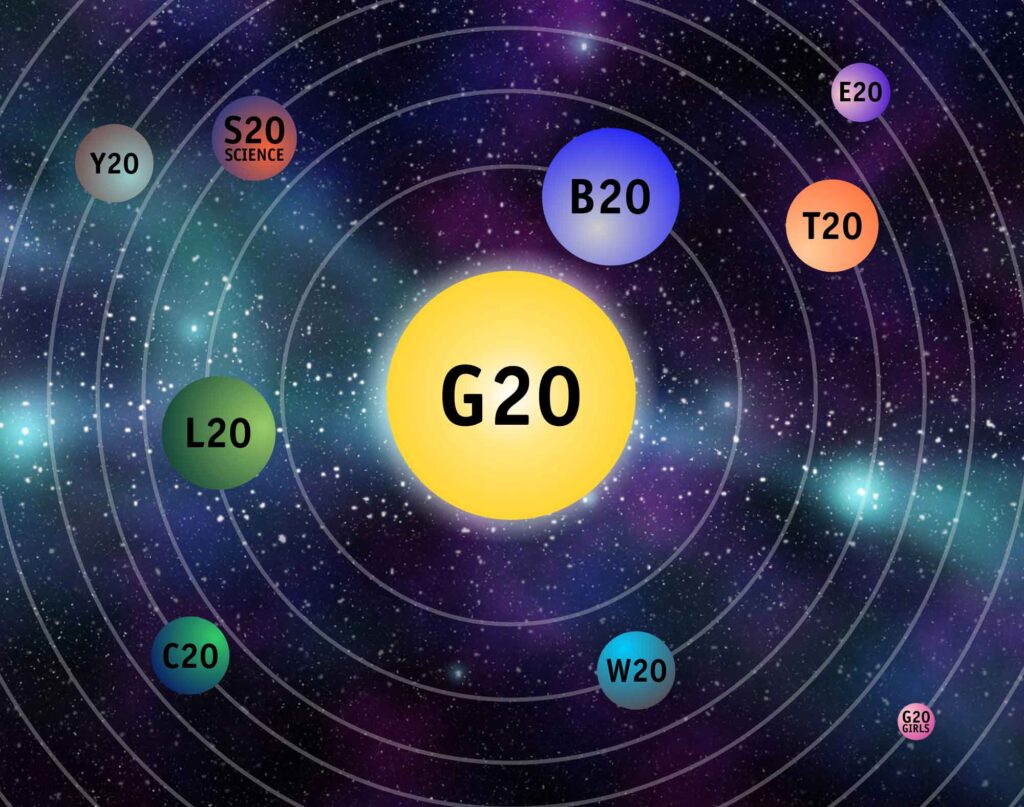
The Creation of the Women20 (W20) – an official G20 Engagement Group
Catalyst The true catalyst for the W20 occurred at the 2014 G20 Summit in Brisbane, Australia. During this summit, G20 leaders committed to reducing the gender employment gap by 25% by 2025, a goal commonly known as “25 by 25.” This came to be known as the Brisbane Agreement.
Establishment The Women20 (W20) was then officially established in 2015 during the Turkish presidency of the G20. It was created as an official engagement group to promote gender-inclusive economic growth, advocate for women’s empowerment, and ensure gender equality is presented to leaders and integrated into the annual G20 Leaders’ Declaration.
Who are the Members of the W20
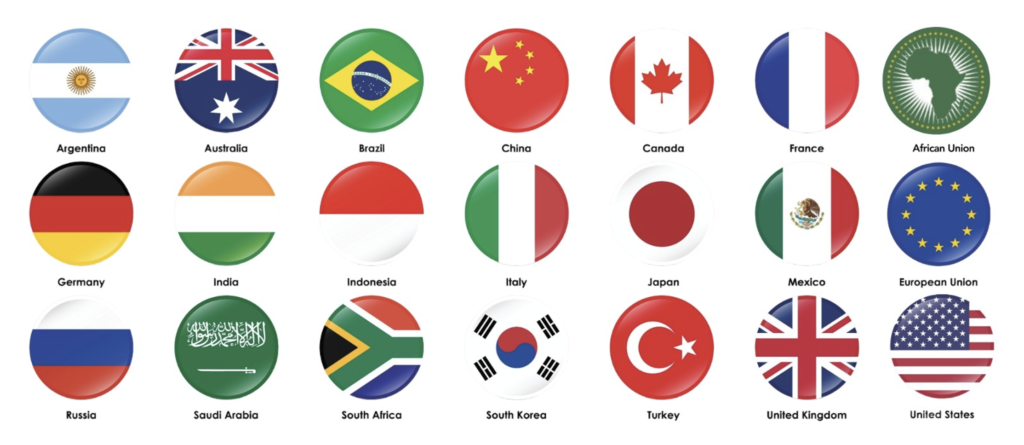
The Delegates of the Women20 come from the Group of Twenty (G20).
The G20, or Group of Twenty, is an international forum of the world’s major economies, created in 1999 to address global economic issues such as financial stability, trade, and sustainable development.
As of 2026, the G20 includes 21 members: 19 sovereign countries (Argentina, Australia, Brazil, Canada, China, France, Germany, India, Indonesia, Italy, Japan, Republic of Korea, Mexico, Russia, Saudi Arabia, South Africa, Türkiye, the United Kingdom, and the United States), plus the European Union (EU), and since 2023, the African Union(AU).
Delegates are officially appointed within each of their Delegations. The Delegates represent the non-governmental voice within each G20 member country or union. They are comprised of civil society representatives, entrepreneurs, academics, researchers, and women leaders across multiple sectors and serve in this role without remuneration. The Delegates often bring in knowledge partners to add expertise in specific areas from well-known and respected organizations.
The working groups for the W20 have evolved with each Presidency Round of the G20. Initially, working groups focused on labour force participation, equality of pay and women’s leadership. The realm of policy recommendations has expanded into access to capital markets and finance, entrepreneurship, closing the digital gender divide, climate change, gender health and violence against women. The W20 goal is to include women’s viewpoints and provide evidence-based recommendations for the G20 across these sectors as well as to have women leaders at the table to ensure a better world for future generations of men and women.
Women20 Milestones:

Over 10 years influencing international policies and advancing women’s rights and inclusion in the global economy and driving policy change in the world’s largest economies.
W20 has made 220 recommendations across 13 thematic areas aimed at influencing G20 Leaders to adopt gender focused policies and translate them into laws advancing women’s rights and prioritising gender equality. G20 leaders have made 109 gender commitments of which 74 originated from W20 recommendations with 80% plus countries implementing at least one recommendation. In 2021 the G20 leaders included the Roadmap of Rome Towards gender Equity in the Declaration.
G20 has increasingly included recommendations from the W20 in its Leaders, Declaration reflecting a growing commitment to gender equality and coupled with a recognition of the urgency and importance of gendered focused initiatives for growth and prosperity.
Successful W20 advocacy emphasising the need for policies that tackle the gender gap in labour force participation, equal pay and economic opportunities for women and other gender related issues in the global economy. Recognition of the care economy by the G20 Leaders demonstrates W20’s capacity to influence global economic policy.
G20 commitments have expanded tenfold linking gender equality to climate, digital transformation and economic policy. W20 advocacy has led to a growing recognition of climate change’s gendered aspects and has transformed environmental policy into a core gender equality issue.
W20 first decade has established a foundation of influence within global economic governance. W20 continues to strengthen is advocacy impact striving to improve accountability mechanisms and addressing implementation gaps. W20 has demonstrated strong adaptability and agility responding to global crisis and emerging challenges. Covid 19 amplified existing gender inequalities whist putting remote and flexible working firmly on the agenda.
The establishment of the Empowerment of Women Ministerial Working Group track in 2023 by the G20 with a remit to promote women’s economic equality and autonomy, equal access to leadership roles, closing the gender pay gap and combatting all forms of gender based violence was in part influenced by the work of the W20. Elevating the importance of women’s participation in the labour market.